Portal Development

Custom Portal Development for Schools, Charities and Service Businesses

If your organisation manages clients, parents, or donors through a patchwork of emails and spreadsheets, a bespoke portal can replace that friction with a single, structured workflow your team actually controls.

April 11, 20264 min read • FSS Growth Team

Custom Portal Development for Schools, Charities and Service Businesses

Schools chasing consent forms by email. Charities managing donor records across three different spreadsheets. Service businesses where a client's only way to check the status of their own work is to send a message and wait. This is the daily reality for organisations that have outgrown their original tools but have not yet found a structured alternative. The friction is familiar, the workarounds are well-worn, and the cost is spread so evenly across the working week that it rarely shows up as a single line item. Until someone adds it up.

What good looks like

A well-built portal does not simply move content online. It restructures how your organisation and the people it serves interact with each other.

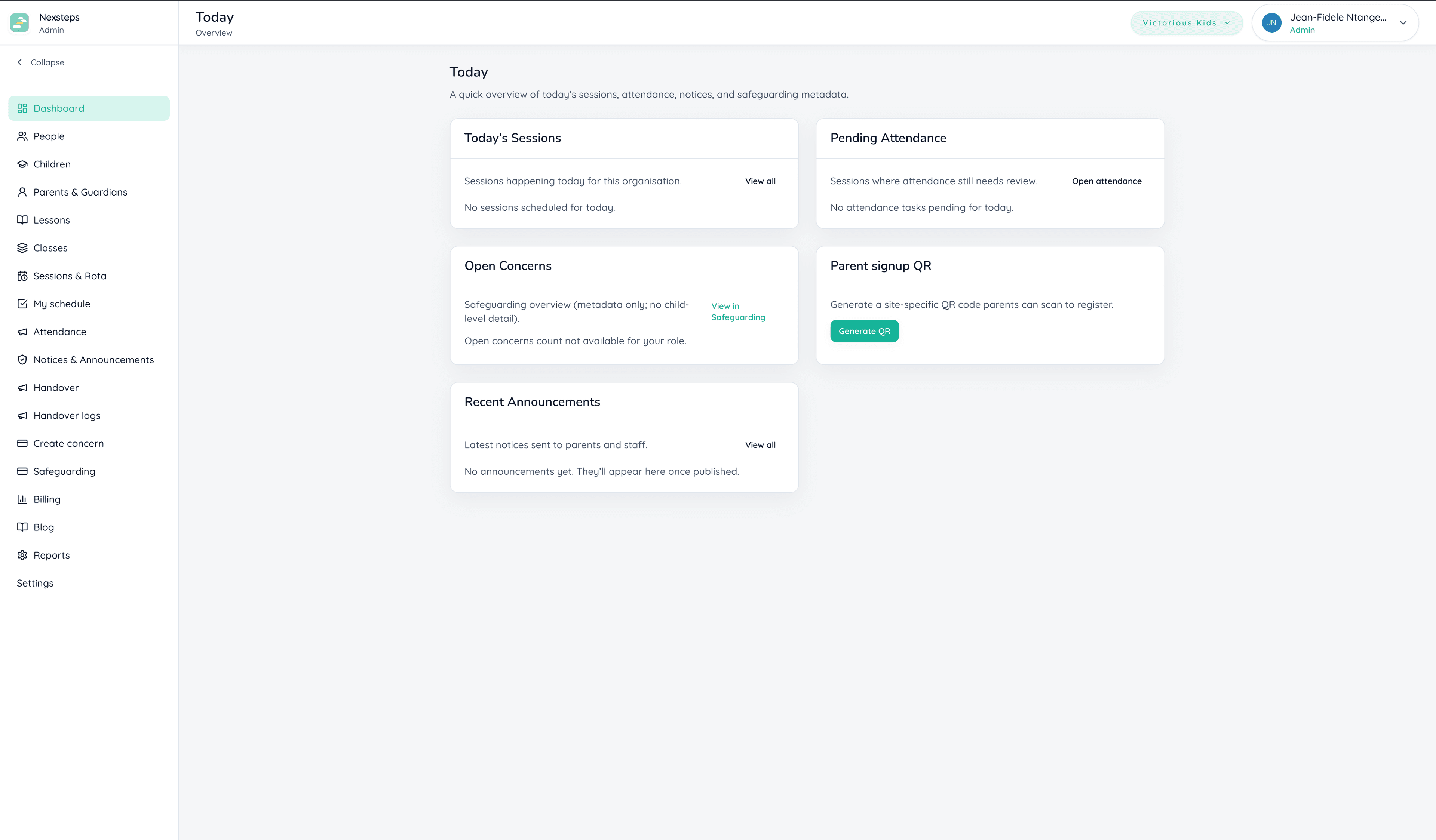
For a school, that might mean parents logging in to complete forms, view attendance records, or request meetings without a single email being needed. For a charity, it could mean donors viewing their giving history, updating their own details, and downloading receipts on their own schedule. For a service business, it might mean clients accessing project updates, approving deliverables, or raising queries in one place rather than across a thread of forwarded messages.

What these outcomes share is a shift in control. Instead of your staff fielding repetitive requests, the people who need information can reach it directly. Instead of data scattered across inboxes and shared drives, it lives in one place with clear ownership and an audit trail.

The practical gains follow naturally:

  • Staff spend less time on low-value admin tasks
  • Errors from manual data handling reduce
  • The experience your organisation delivers becomes more consistent
  • Access controls and compliance become manageable rather than chaotic

A good portal is also built around your workflows, not the other way around. Off-the-shelf platforms frequently require you to adapt your processes to fit their structure. A bespoke portal is designed around the way your organisation already operates, or the way it needs to.

What to look for in a supplier

Choosing a development partner for a portal is a meaningful commitment. The wrong choice costs time, money, and often the trust of the people who will use the result. Here are the criteria that matter most at the point of vendor selection.

Do they understand your sector?

Generic software agencies build generic software. A supplier who has worked with schools, charities, or service organisations will understand the specific constraints you operate under: data sensitivity, safeguarding considerations, trustee sign-off processes, or compliance obligations that are not obvious to an outsider. If a supplier has never raised any of these things during an initial conversation, that is a signal worth heeding.

Can they give you clear answers on data and access control?

Portals handle information that belongs to real people: parents, donors, clients. Before committing, ask how the supplier approaches authentication, role-based access, and data residency. A credible supplier will have straightforward answers and should be able to explain their approach to UK GDPR in a portal context without you needing to prompt them repeatedly.

Will you own what is built?

Some suppliers build on proprietary platforms where you are, in effect, renting your own portal. If the relationship ends, so does your access. Ask directly: who owns the codebase? Who controls the hosting? What happens if you need to move to a different provider in two years? You should receive a clear and confident answer. Vagueness here is a risk, not a minor detail.

Are they designing for your users, not just your brief?

A portal is only useful if the people it is designed for will actually use it. Ask whether the supplier includes any usability thinking in their process. A team that only asks what features you want, without asking who will use them and in what context, tends to deliver technically correct but practically frustrating results.

What does ongoing support look like?

Portals are not set-and-forget. Staff change. Workflows evolve. Features need updating as your organisation grows. Understand from the outset what post-launch support looks like, how it is priced, and whether the team that built your portal will still be reachable when you need them.

Talk to FSS about your portal

Faithful Software Solutions builds bespoke portals for schools, charities, and service businesses across the UK. If you have a workflow problem a portal could solve, we would like to hear about it.

Discuss your portal idea

Every month spent managing clients, parents, or donors through manual workarounds is a month of avoidable staff overhead and an avoidable gap in the experience your organisation delivers. The right portal does not require a large team or an unlimited budget to begin. It requires a clear problem and a supplier who takes the time to understand it properly.

Related articles

Apr 4, 20264 min read

Custom Software Development Company in the UK for Complex Operations

Off-the-shelf software rarely fits the way your organisation actually works. This guide helps decision-makers evaluate custom software development companies in the UK and choose the right partner for complex operational needs.

custom software development company UKCustom Software DevelopmentBespoke Software
Read article